
Why Does Numbness Travel Down Your Arm or Leg? Understanding How Nerves Communicate with Your Body

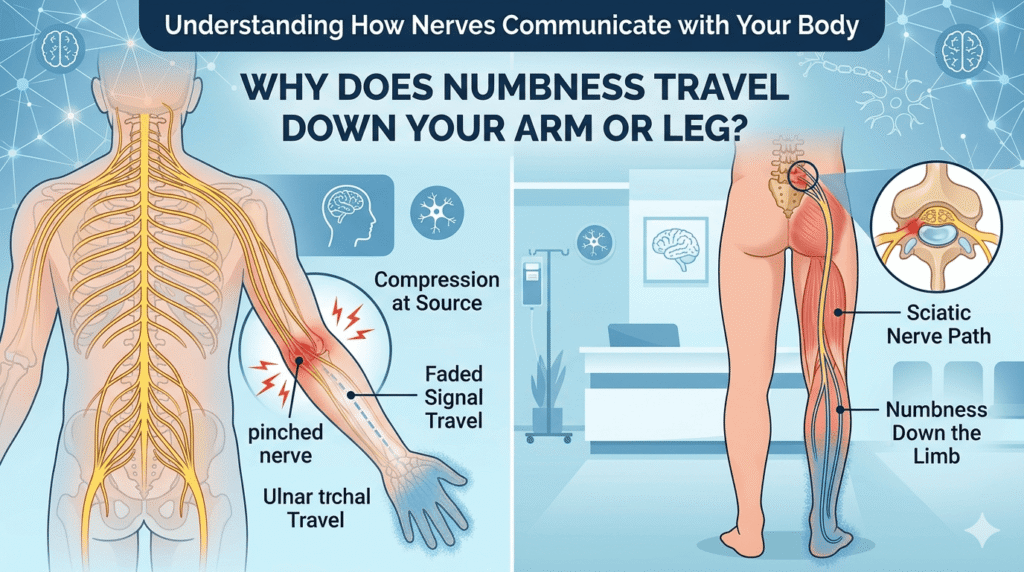
Have you ever experienced tingling in your fingers, numbness in your leg, or sudden weakness when lifting your foot or arm?
Many people assume these symptoms are simply due to fatigue or poor circulation. However, they can sometimes indicate that a nerve is being irritated, compressed, or not functioning properly.
At Nidan Physiotherapy Clinic, understanding how nerves communicate with different parts of the body helps us identify the source of symptoms and create effective treatment plans.
Let’s explore how your nervous system works and why symptoms like numbness, tingling, and weakness often follow specific patterns.
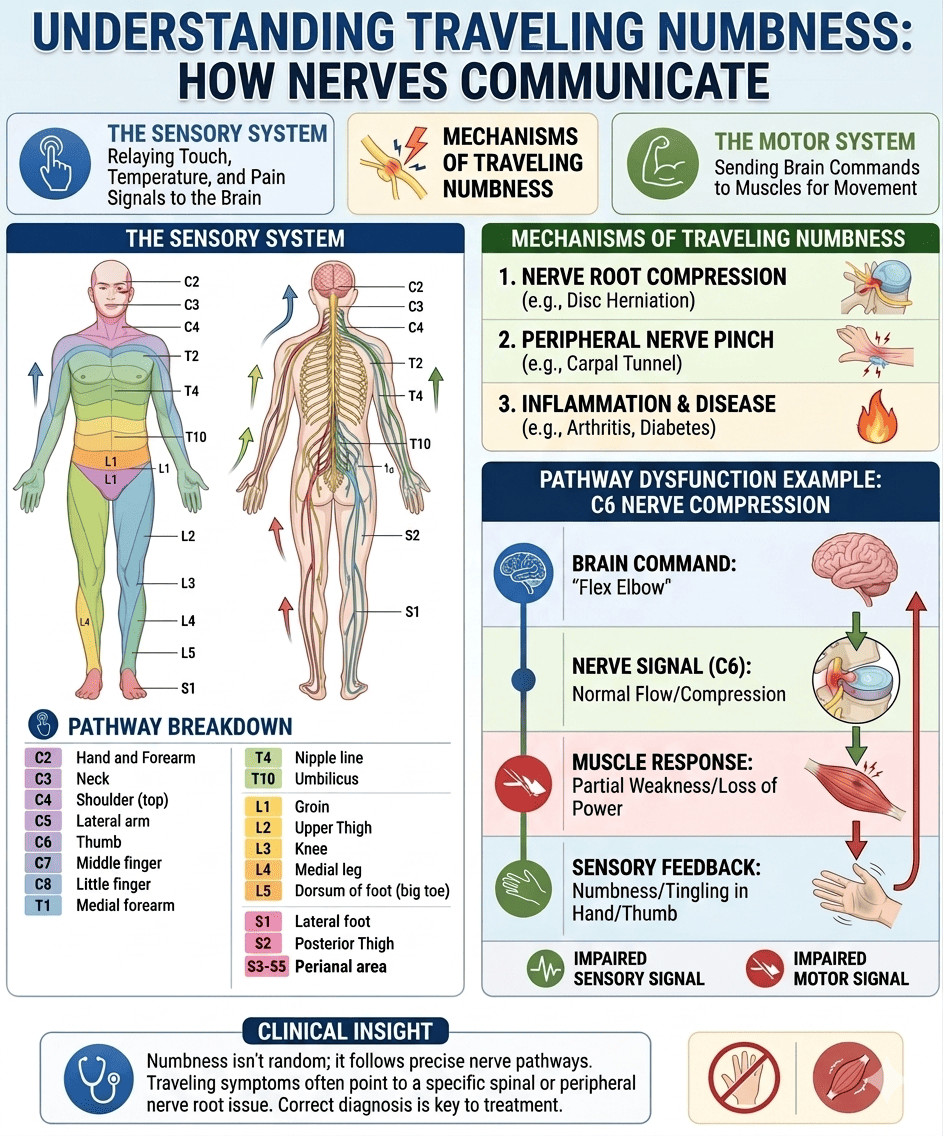
Your Spine Is Like a Communication Highway
Your brain and spinal cord constantly send messages throughout the body.
These messages travel through spinal nerves that branch out from different levels of the spine. Each nerve has a specific role and is responsible for supplying sensation and movement to particular areas.
When a nerve becomes irritated or compressed, the symptoms often appear in predictable locations rather than randomly throughout the body.
This is why a problem in the neck can sometimes cause symptoms in the arm, and a problem in the lower back can affect the leg or foot.
Why Do You Feel Numbness or Tingling?
Nerves carry information about touch, temperature, pressure, and pain.
When a nerve root is irritated, the signals may not travel normally. As a result, you may notice:
- Numbness
- Tingling sensations
- Burning feelings
- Pins and needles
- Reduced sensitivity to touch
The location of these symptoms often gives valuable clues about which nerve may be affected.
For example, numbness affecting the thumb may point toward a different nerve than numbness affecting the little finger.
Why Does Muscle Weakness Happen?
Nerves do more than provide sensation.
They also control muscle movement.
When a nerve is unable to send strong signals to a muscle, you may experience:
- Weak grip strength
- Difficulty lifting the foot
- Trouble climbing stairs
- Reduced shoulder strength
- Difficulty holding objects
Many patients are surprised to learn that weakness in a muscle may actually begin with a nerve issue rather than a muscle problem itself.
Common Conditions That Can Affect Nerves
Several conditions may place pressure on spinal nerves, including:
Disc Bulges or Disc Herniations
When a spinal disc protrudes, it may irritate nearby nerves, causing symptoms that travel into the arms or legs.
Neck Problems
Conditions affecting the cervical spine can lead to pain, tingling, or weakness in the shoulders, arms, or hands.
Lower Back Conditions
Lumbar spine problems can produce symptoms that travel into the hips, thighs, calves, or feet.
Spinal Degeneration
Age-related changes in the spine can sometimes narrow the spaces where nerves travel, increasing irritation.
How Physiotherapists Assess Nerve Function
At Nidan Physiotherapy Clinic, we don’t just focus on the painful area.
A thorough assessment may include:
- Movement testing
- Muscle strength evaluation
- Sensation testing
- Reflex examination
- Posture analysis
- Functional movement assessment
These tests help identify whether symptoms are coming from a muscle, joint, nerve, or a combination of factors.
Warning Signs You Should Not Ignore
While occasional tingling may not always be serious, certain symptoms should be evaluated promptly:
- Persistent numbness
- Increasing weakness
- Difficulty walking
- Loss of grip strength
- Symptoms spreading into the arms or legs
- Pain accompanied by significant weakness
Early assessment can help prevent symptoms from worsening.
How Physiotherapy Can Help
Physiotherapy aims to reduce pressure on irritated nerves while improving movement and function.
Depending on your condition, treatment may include:
Movement and Mobility Exercises
Gentle exercises help improve spinal movement and reduce stiffness around affected areas.
Strengthening Programs
Targeted strengthening can improve support around the spine and reduce unnecessary stress on nerves.
Postural Correction
Poor posture can increase pressure on the neck and lower back. Improving alignment often helps reduce symptoms.
Nerve Mobility Exercises
Specific movements may help nerves glide more comfortably through surrounding tissues.
Education and Activity Modification
Understanding which activities aggravate symptoms helps patients recover more effectively.
Simple Tips to Protect Your Nerves
You can support spinal and nerve health by:
- Avoiding prolonged sitting
- Maintaining good posture
- Staying physically active
- Taking movement breaks during work
- Performing regular strengthening exercises
- Seeking professional help when symptoms persist
Small lifestyle changes can significantly reduce stress on the spine and nervous system.
When Should You Visit Nidan Physiotherapy Clinic?
If you’re experiencing recurring numbness, tingling, weakness, or pain that travels into the arms or legs, it’s important to understand the underlying cause.
At Nidan Physiotherapy Clinic, we assess the source of your symptoms and create individualized treatment plans designed to improve mobility, restore strength, and help you return to daily activities with confidence.
Final Thoughts
Numbness, tingling, and weakness are not symptoms to ignore.
They can provide important clues about how your nerves and spine are functioning.
By identifying problems early and addressing them through physiotherapy, many people can improve their symptoms, regain confidence in movement, and prevent long-term complications.
If you’re noticing changes in sensation or muscle strength, professional assessment can help you understand what’s happening and what steps to take next.
Frequently Asked Questions
What causes numbness in the arms or legs?
Numbness may occur when a nerve becomes irritated, compressed, or injured.
Can physiotherapy help nerve-related symptoms?
Yes. Physiotherapy can help improve movement, reduce nerve irritation, and strengthen supporting muscles.
Is tingling always caused by a nerve problem?
Not always, but nerve irritation is one of the most common causes of persistent tingling sensations.
When should I worry about muscle weakness?
If weakness is increasing, affecting daily activities, or accompanied by numbness or pain, professional evaluation is recommended.
Can a slipped disc cause weakness in the legs?
Yes. A disc problem can sometimes place pressure on spinal nerves that control muscles in the leg.
Leave a Reply