Understanding Spasticity: Causes, Symptoms, and How Physiotherapy Can Help

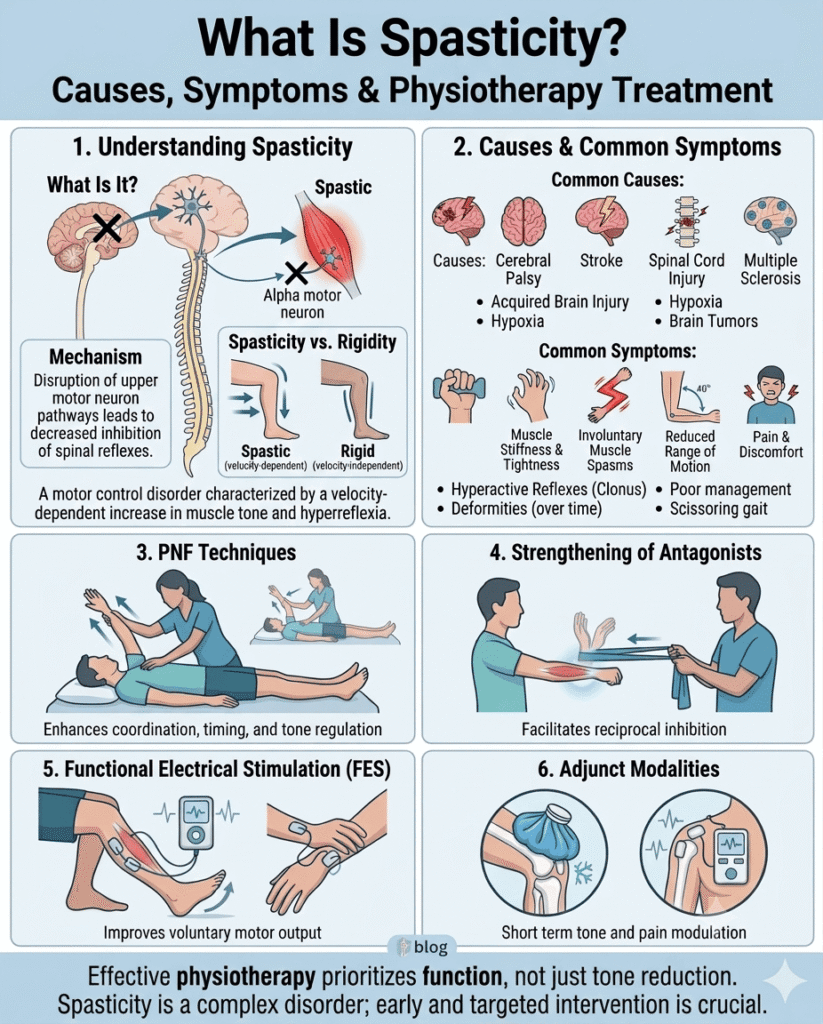
Many people recovering from neurological conditions such as stroke, spinal cord injury, cerebral palsy, or multiple sclerosis experience muscle stiffness that feels difficult to control.
This condition is known as spasticity.
It can make everyday activities like walking, reaching, dressing, standing, or even maintaining a comfortable position more challenging.
At Nidan Physiotherapy Clinic, we help patients manage spasticity through structured rehabilitation programs designed to improve movement, independence, and quality of life.
What Is Spasticity?
Spasticity is a condition where muscles become unusually tight or overactive due to a problem in the brain or spinal cord.
Normally, the nervous system helps muscles contract and relax smoothly. When the communication between the brain and muscles is disrupted, certain muscles may remain constantly active or react too strongly to movement.
As a result, patients may experience:
- Muscle stiffness
- Difficulty moving joints freely
- Involuntary muscle contractions
- Reduced balance and coordination
- Difficulty performing daily activities
Spasticity is not simply “tight muscles.” It is a neurological condition that affects how muscles receive and respond to signals from the nervous system.
What Causes Spasticity?
Spasticity usually develops after damage to parts of the nervous system that control movement.
Common conditions associated with spasticity include:
Stroke
After a stroke, some muscles may become stiff due to changes in how the brain controls movement.
Spinal Cord Injury
Damage to the spinal cord can interrupt communication between the brain and muscles, resulting in increased muscle tone.
Cerebral Palsy
Children with cerebral palsy often experience spasticity as a result of early brain injury affecting motor control.
Multiple Sclerosis
Nerve damage caused by multiple sclerosis can interfere with muscle control and lead to stiffness or spasms.
Traumatic Brain Injury
Injuries affecting the brain may alter normal movement patterns and contribute to increased muscle tightness.
Common Signs of Spasticity
The symptoms vary depending on the condition and the muscles involved.
Patients may notice:
- Tightness in the arms or legs
- Difficulty straightening joints
- Muscle spasms
- Reduced flexibility
- Walking difficulties
- Changes in posture
- Problems with balance
- Fatigue during movement
Some people experience mild stiffness, while others may have significant limitations that affect daily life.
How Physiotherapy Helps Manage Spasticity
Physiotherapy plays a major role in helping patients improve movement and reduce the impact of spasticity.
At Nidan Physiotherapy Clinic, treatment plans are designed around the patient’s goals, abilities, and neurological condition.
1. Positioning and Posture Management
The way the body is positioned throughout the day can influence muscle stiffness.
Proper positioning can help:
- Reduce abnormal muscle activity
- Improve comfort
- Prevent joint stiffness
- Maintain better alignment
This is especially important for patients who spend long periods in bed or use wheelchairs.
2. Gentle Stretching Exercises
Regular stretching helps maintain flexibility and reduce muscle tightness.
Stretching programs may focus on:
- Arms
- Legs
- Ankles
- Hips
- Shoulders
The goal is to maintain movement and prevent muscles from becoming shortened over time.
3. Weight-Bearing Activities
Standing and weight-bearing exercises provide important sensory input to the body.
These activities may help:
- Improve muscle control
- Enhance balance
- Encourage more normal movement patterns
- Improve confidence during standing and walking
Depending on the patient’s ability, exercises may be performed with support from therapists or assistive devices.
4. Functional Movement Training
Rehabilitation should focus on real-life activities.
This may include:
- Walking practice
- Transfers from bed to chair
- Reaching activities
- Balance exercises
- Stair training
The aim is to improve independence in everyday tasks rather than focusing only on isolated exercises.
5. Strengthening Weaker Muscles
When certain muscles become overactive, other muscles often become weaker.
Targeted strengthening programs help restore better balance throughout the body and improve overall movement efficiency.
6. Electrical Stimulation
In some cases, physiotherapists may use electrical stimulation to activate weaker muscles.
This technique can help:
- Improve muscle activation
- Support movement training
- Enhance rehabilitation outcomes
- Assist with walking and functional activities
It is commonly used as part of a broader rehabilitation program.
Why Early Physiotherapy Is Important
Starting rehabilitation early often provides better outcomes.
Early intervention may help:
- Maintain joint flexibility
- Reduce complications
- Improve movement quality
- Support functional independence
- Prevent long-term muscle shortening
The sooner rehabilitation begins, the greater the opportunity to develop effective movement strategies.
Can Spasticity Be Completely Cured?
Spasticity is usually a long-term condition related to neurological damage.
However, with the right treatment approach, many people can significantly improve:
- Mobility
- Function
- Comfort
- Independence
- Quality of life
The goal of physiotherapy is not simply to reduce stiffness but to help patients move and function more effectively.
When Should You Visit a Physiotherapist?
You should seek professional assessment if you notice:
- Increasing muscle stiffness
- Difficulty moving joints
- Changes in walking pattern
- Frequent muscle spasms
- Reduced ability to perform daily tasks
- Loss of flexibility after a neurological condition
At Nidan Physiotherapy Clinic, our rehabilitation team works closely with patients and families to create personalized treatment plans that support long-term recovery and functional improvement.
Final Thoughts
Spasticity can affect movement, confidence, and independence, but it does not have to define a person’s life.
Through structured physiotherapy, targeted exercises, posture management, and functional training, many individuals can improve their mobility and continue participating in daily activities.
At Nidan Physiotherapy Clinic, we believe rehabilitation is about helping people achieve meaningful improvements that enhance everyday living and long-term well-being.
Frequently Asked Questions
What is the main cause of spasticity?
Spasticity occurs when damage to the brain or spinal cord affects normal muscle control.
Can physiotherapy reduce spasticity?
Physiotherapy can help manage spasticity by improving movement, flexibility, strength, and function.
Is spasticity painful?
For some people, muscle tightness and spasms can cause discomfort or pain.
Can children with cerebral palsy benefit from physiotherapy for spasticity?
Yes. Physiotherapy is commonly used to improve movement, posture, and function in children with cerebral palsy.
How often should someone with spasticity attend physiotherapy?
The frequency depends on the individual’s condition, goals, and rehabilitation needs. A physiotherapist can recommend an appropriate treatment plan.
Leave a Reply