
Sciatica Treatment: Understanding the Cause Before Choosing the Right Treatment

Sciatica Treatment: Why Finding the Real Cause Matters
Pain that starts in your lower back and travels down your leg can make everyday activities difficult. Walking, sitting, standing for long periods, or even sleeping comfortably may become challenging.
This type of pain is commonly known as sciatica.
Many people think sciatica is a condition on its own. In reality, it is a symptom that usually develops because the sciatic nerve is being irritated or compressed somewhere along its path.
At Nidan Physiotherapy Clinic, we believe successful treatment begins with understanding why the sciatic nerve is irritated—not just treating the pain itself.
What Is Sciatica?
The sciatic nerve is the largest nerve in the body. It begins in the lower back, passes through the hips and buttocks, and continues down each leg.
When this nerve becomes irritated or compressed, you may experience symptoms such as:
- Pain running from the lower back into the leg
- Tingling or “pins and needles”
- Numbness
- Burning sensations
- Muscle weakness
- Difficulty walking or standing comfortably
Some people experience mild discomfort, while others have severe pain that affects their daily routine.
What Causes Sciatica?
Sciatica can develop for several different reasons.
Understanding the cause helps determine the most effective treatment plan.
1. Disc Problems
A bulging or herniated spinal disc is one of the most common causes of sciatica.
When a disc presses against a nearby nerve root, pain may travel down the buttock, thigh, calf, or foot.
This type of sciatica often responds well to a rehabilitation program that focuses on improving spinal movement, reducing pressure on the nerve, and strengthening the muscles that support the lower back.
2. Piriformis Syndrome
The sciatic nerve travels close to a small muscle deep within the buttock called the piriformis.
If this muscle becomes tight or irritated, it may compress the nerve and create symptoms similar to sciatica.
Treatment often focuses on improving hip flexibility, reducing muscle tightness, and restoring normal movement around the hip.
3. Spinal Narrowing
As people age, natural changes in the spine may reduce the space available for nerves.
This can lead to symptoms such as:
- Pain while standing
- Leg discomfort during walking
- Relief after sitting or bending forward
In these cases, treatment aims to improve mobility, walking tolerance, and overall spinal function.
Why an Accurate Assessment Is Important
Not everyone with leg pain has the same problem.
Two people may describe similar symptoms but require completely different treatment approaches.
At Nidan Physiotherapy Clinic, every patient undergoes a detailed assessment that may include:
- Movement evaluation
- Posture assessment
- Muscle strength testing
- Flexibility assessment
- Nerve mobility examination
- Functional movement analysis
This allows us to identify the actual source of symptoms rather than simply treating pain.
How Physiotherapy Helps Sciatica
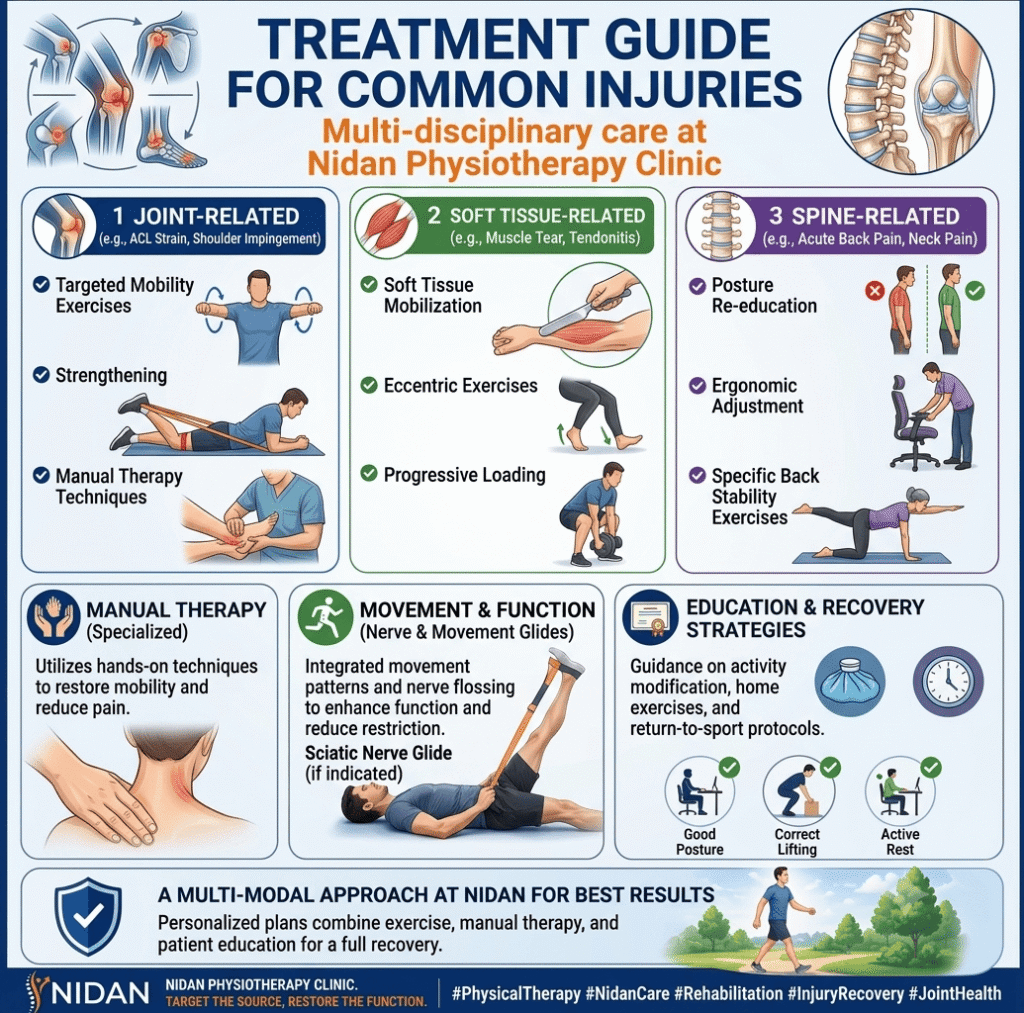
A personalized physiotherapy program may include several approaches depending on the cause of your symptoms.
Improve Spinal Mobility
Gentle exercises can help reduce stiffness and improve movement of the lower back.
Better spinal mobility may reduce stress on irritated nerves and improve daily function.
Strengthen Supporting Muscles
The muscles around your core, hips, and lower back provide important support for the spine.
Strengthening these muscles improves stability and reduces unnecessary strain during daily activities.
Manual Therapy
Hands-on techniques performed by a physiotherapist may help reduce muscle tightness, improve joint mobility, and make movement more comfortable.
For many patients, manual therapy is combined with exercise rather than used on its own.
Nerve Mobility Exercises
Sometimes the sciatic nerve itself becomes sensitive or restricted.
Specific nerve mobility exercises may help the nerve move more comfortably through surrounding tissues, reducing irritation during movement.
These exercises are always prescribed carefully based on individual assessment.
Improve Daily Movement Habits
Recovery is not only about treatment inside the clinic.
Patients also learn practical strategies for:
- Sitting comfortably
- Standing correctly
- Safe lifting techniques
- Workplace posture
- Sleeping positions
- Activity modification
These small adjustments often play a major role in preventing symptoms from returning.
What You Can Do at Home
While every treatment plan is different, some healthy habits may support recovery:
- Avoid sitting continuously for long periods.
- Change positions regularly throughout the day.
- Stay physically active within your comfort level.
- Follow the exercise program recommended by your physiotherapist.
- Avoid lifting heavy objects without proper technique.
- Maintain a healthy body weight to reduce stress on the spine.
When Should You Visit a Physiotherapist?
You should seek professional advice if:
- Pain travels below the knee.
- Leg numbness continues to worsen.
- Walking becomes difficult.
- Symptoms keep returning.
- Back pain is affecting work or daily activities.
- Home remedies are not providing lasting relief.
Early treatment often leads to faster recovery and may help prevent long-term complications.
Why Choose Nidan Physiotherapy Clinic?
At Nidan Physiotherapy Clinic, we understand that every case of sciatica is different.
Instead of following a one-size-fits-all approach, we identify the underlying cause of your symptoms and develop a rehabilitation program that matches your condition, lifestyle, and goals.
Our focus is to help you:
- Reduce pain
- Improve movement
- Restore strength
- Return to daily activities safely
- Prevent future episodes
Final Thoughts
Sciatica is more than just back pain.
Because several different conditions can irritate the sciatic nerve, successful treatment depends on identifying the actual source of the problem.
With a personalized physiotherapy program, many people experience significant improvements in pain, mobility, and quality of life.
If you’re experiencing persistent leg pain, numbness, or tingling, Nidan Physiotherapy Clinic is here to help you take the first step toward recovery.
Frequently Asked Questions
Can physiotherapy cure sciatica?
Physiotherapy can effectively manage many cases of sciatica by addressing the underlying cause, improving movement, and reducing pressure on the irritated nerve.
How long does sciatica take to improve?
Recovery depends on the cause and severity of the condition. Some patients improve within a few weeks, while others may require a longer rehabilitation program.
Is walking good for sciatica?
Gentle walking is often beneficial for many people with sciatica, but activity should always be appropriate for the individual’s condition.
Can sciatica return after treatment?
It can, especially if underlying movement habits, posture, or muscle weakness are not addressed. Continuing recommended exercises can help reduce the risk of recurrence.
When should I seek immediate medical attention for sciatica?
If you experience severe weakness, loss of bladder or bowel control, or numbness around the groin area, seek emergency medical care immediately.
Leave a Reply