
Simple Physiotherapy Techniques for Everyday Pain Relief

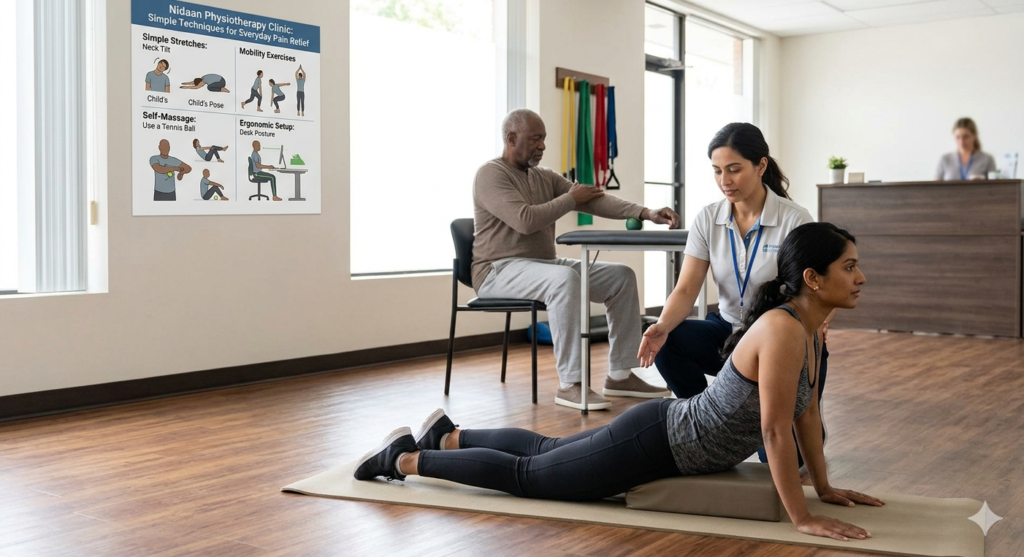
Small movements should not feel difficult.
Getting out of bed, walking to the kitchen, climbing stairs, bending to pick something up, or standing for a long time are normal parts of daily life. But when these simple actions start causing pain, even your routine can feel tiring.
At Nidaan Physiotherapy Clinic, we help people understand why everyday movements hurt and how the right physiotherapy plan can improve comfort, strength, and mobility.
Why Do Everyday Movements Cause Pain?
Pain during daily activities can happen for many reasons. Sometimes it comes from an old injury. Sometimes it is due to stiffness, weak muscles, poor posture, arthritis, or lack of regular movement.
You may feel pain while:
- climbing stairs,
- bending or lifting,
- getting up from bed,
- walking for long periods,
- standing too long,
- or reaching overhead.
The reference blog also focuses on these common daily pain points and explains how they can affect independence and quality of life.
How Physiotherapy Helps You Move Better
Physiotherapy is not only about pain relief. It is about helping your body move in a better, safer, and stronger way.
At Nidaan Physiotherapy Clinic, we focus on finding the reason behind your pain and creating a treatment plan that fits your lifestyle.
1. Detailed Movement Assessment
The first step is understanding what is causing the pain.
A physiotherapist may check your posture, walking pattern, joint movement, muscle strength, and flexibility. This helps identify whether the pain is linked to stiffness, weakness, imbalance, or poor movement habits.
Once the cause is clear, your treatment becomes more focused and effective.
2. Gentle Mobility Exercises
When joints and muscles become stiff, movement can feel painful or restricted.
Gentle mobility exercises help improve flexibility and reduce tightness. These may include simple movements for the neck, shoulders, back, hips, knees, or ankles depending on your condition.
The goal is to help your body move more freely without forcing painful movement.
3. Manual Therapy for Pain and Stiffness
Manual therapy means hands-on treatment by a physiotherapist.
It may include soft tissue release, gentle joint movement, stretching, or muscle relaxation techniques. These methods can help reduce stiffness, improve blood flow, and make movement easier.
The reference blog also mentions hands-on care and supportive methods as part of physiotherapy for everyday pain.
4. Strength Training for Daily Activities
Weak muscles can make simple tasks harder.
For example:
- weak knees may make stairs painful,
- weak hips may affect walking,
- weak core muscles may increase back pain while bending,
- and weak shoulders may make lifting difficult.
Physiotherapy uses simple strengthening exercises that match real-life activities. These may include sit-to-stand practice, step-ups, balance work, core exercises, or light resistance training.
The aim is not heavy gym training. The aim is to make your daily movements easier.
5. Posture and Movement Correction
Sometimes pain continues because of the way we sit, stand, bend, or lift.
A physiotherapist can teach you safer ways to move during daily tasks, such as:
- getting out of bed,
- lifting objects,
- sitting at a desk,
- climbing stairs,
- or standing for long periods.
Small changes in posture and movement habits can reduce pressure on joints and muscles.
6. Home Exercise Plan
Physiotherapy works best when the progress continues outside the clinic.
At Nidaan Physiotherapy Clinic, patients are often given simple home exercises that are easy to follow. These exercises help maintain progress, reduce stiffness, and build strength gradually.
Consistency matters more than intensity.
Simple Daily Tips to Reduce Pain
You can support your recovery with a few habits:
- Move regularly instead of sitting for too long
- Stretch gently in the morning
- Wear comfortable footwear
- Avoid sudden heavy lifting
- Maintain good posture while sitting and working
- Take rest when needed, but avoid complete inactivity
The reference blog also highlights movement breaks, stretching, posture, footwear, and listening to the body as useful daily habits.
When Should You Visit a Physiotherapist?
You should consider visiting a physiotherapy clinic if:
- pain is affecting your daily routine,
- you struggle with stairs, walking, or bending,
- stiffness is worse in the morning,
- pain keeps coming back,
- or you feel less confident while moving.
Early care can help prevent the problem from becoming more serious.
Final Thoughts
Everyday pain should not become your “normal.”
If simple movements have started feeling difficult, physiotherapy can help you regain strength, improve mobility, and return to daily activities with more confidence.
At Nidaan Physiotherapy Clinic, we focus on practical treatment that supports your real life — walking, standing, bending, climbing stairs, working, and moving comfortably again.
Leave a Reply