Stroke Recovery: Understanding the Different Stages and How Physiotherapy Helps

Stroke Recovery: Why Every Stage Matters
Recovering from a stroke is different for every individual.
Some people regain movement quickly, while others require months of rehabilitation. One person’s recovery may focus on learning to walk again, while another may work on improving hand function or balance.
The important thing to remember is that recovery usually happens gradually. Small improvements often build into meaningful progress over time.
At Nidan Physiotherapy Clinic, we help stroke survivors and their families understand each phase of recovery and create rehabilitation plans that match their current abilities.
What Happens After a Stroke?
A stroke can interrupt the brain’s ability to send signals to different parts of the body.
Depending on which area of the brain is affected, a person may experience:
- Weakness on one side of the body
- Difficulty walking
- Poor balance
- Reduced coordination
- Muscle stiffness
- Difficulty using the hand or arm
- Problems with daily activities
Recovery begins as the brain starts adapting and creating new pathways to regain lost function. Physiotherapy plays an important role in supporting this process.
Why Stroke Recovery Happens in Stages
Recovery does not happen all at once.
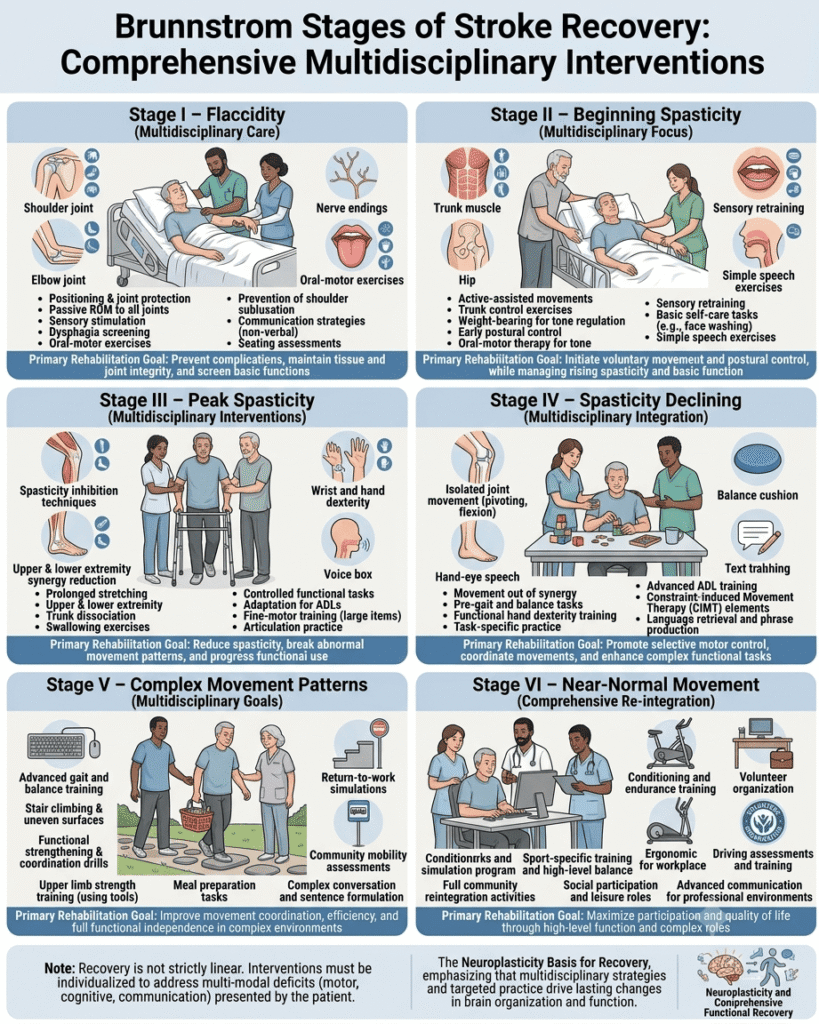
As healing progresses, muscles, joints, and the nervous system respond differently. Because of this, rehabilitation goals change over time.
Some patients initially need help with basic positioning, while later they focus on walking, climbing stairs, or returning to work.
Understanding these stages helps physiotherapists choose the right treatment at the right time.
Early Recovery: Protecting the Body
Immediately after a stroke, movement may be very limited.
The priority during this phase is to:
- Prevent joint stiffness
- Maintain flexibility
- Improve comfort
- Protect the shoulder and other vulnerable joints
- Encourage safe positioning
- Support breathing and circulation
Even when movement is minimal, early rehabilitation helps reduce complications and prepares the body for future progress.
Beginning to Regain Movement
As recovery continues, small voluntary movements may begin to appear.
During this stage, physiotherapy focuses on:
- Assisted exercises
- Sitting balance
- Weight shifting
- Standing practice
- Basic movement training
The goal is to help patients become more confident while encouraging safe movement.
Managing Muscle Stiffness
Many stroke survivors develop muscle tightness or stiffness during recovery.
This can make everyday movements more difficult and affect walking or arm function.
Treatment may include:
- Gentle stretching
- Positioning techniques
- Controlled weight-bearing activities
- Guided movement exercises
- Functional training
Rather than simply reducing stiffness, physiotherapy aims to improve the quality of movement.
Learning Better Control
As strength improves, patients gradually develop better control over individual joints and muscles.
Therapy often includes:
- Reaching activities
- Hand function exercises
- Balance training
- Standing activities
- Walking practice
These exercises are designed to improve independence during everyday tasks such as dressing, eating, and personal care.
Returning to Daily Life
As recovery progresses further, rehabilitation becomes more focused on real-life activities.
Treatment may involve:
- Stair climbing
- Outdoor walking
- Improving endurance
- Functional strengthening
- Coordination exercises
- Community mobility
For many people, this stage is about returning to hobbies, work, family responsibilities, and social activities.
Why Every Stroke Recovery Journey Is Different
No two stroke survivors recover in exactly the same way.
Recovery depends on many factors, including:
- The severity of the stroke
- The area of the brain affected
- Age and general health
- How early rehabilitation begins
- Consistency with therapy
- Family and caregiver support
Some people move through recovery stages quickly, while others may need more time.
The most important thing is to focus on steady progress rather than comparing recovery with someone else.
How Physiotherapy Helps Stroke Recovery
At Nidan Physiotherapy Clinic, stroke rehabilitation is designed around each patient’s individual needs.
Depending on your condition, treatment may include:
Mobility Training
Helping improve walking, standing, and transfers safely.
Balance Exercises
Reducing the risk of falls while improving confidence during movement.
Strengthening Exercises
Building muscle strength to support everyday activities.
Functional Training
Practising activities such as reaching, sitting, standing, dressing, and climbing stairs.
Gait Rehabilitation
Improving walking pattern, endurance, and overall mobility.
Home Exercise Programs
Providing simple exercises that patients and caregivers can continue between therapy sessions.
The Importance of Starting Rehabilitation Early
Beginning physiotherapy as early as medically appropriate can provide several benefits.
Early rehabilitation may help:
- Improve movement
- Reduce stiffness
- Maintain joint flexibility
- Prevent complications
- Increase independence
- Build confidence
Recovery is often more successful when therapy begins early and continues consistently.
Supporting Stroke Recovery at Home
Family members also play an important role.
Simple ways to support recovery include:
- Encouraging regular exercise
- Following the physiotherapist’s advice
- Practising safe transfers
- Maintaining a positive environment
- Celebrating small improvements
Every small achievement is an important step forward.
Why Choose Nidan Physiotherapy Clinic?
At Nidan Physiotherapy Clinic, we understand that stroke recovery requires patience, expert guidance, and personalized care.
Our neuro rehabilitation programs focus on improving movement, balance, strength, confidence, and independence so patients can regain the highest possible quality of life.
We work closely with both patients and caregivers to make rehabilitation practical, realistic, and goal-oriented.
Final Thoughts
Stroke recovery is a journey, not a race.
Progress may sometimes feel slow, but every improvement matters. With the right rehabilitation program, many stroke survivors regain important skills that help them live more independently.
At Nidan Physiotherapy Clinic, we are committed to supporting patients through every stage of recovery with compassionate, evidence-based physiotherapy.
Frequently Asked Questions
How soon should physiotherapy start after a stroke?
Physiotherapy usually begins as soon as the patient is medically stable, under the guidance of the healthcare team.
Can stroke patients recover completely?
Recovery varies from person to person. Some regain most of their function, while others continue to improve over months or years with rehabilitation.
How long does stroke rehabilitation take?
Recovery depends on the severity of the stroke and the individual’s progress. Some people improve within weeks, while others require longer-term therapy.
Why is physiotherapy important after a stroke?
Physiotherapy helps improve strength, balance, mobility, coordination, and independence while reducing the risk of complications.
Can physiotherapy help months after a stroke?
Yes. Even if a stroke occurred months or years ago, physiotherapy may still improve movement, strength, and daily function.
Leave a Reply