
Why Sitting Too Long May Be Hurting Your Back: What Your Spine Experiences Throughout the Day

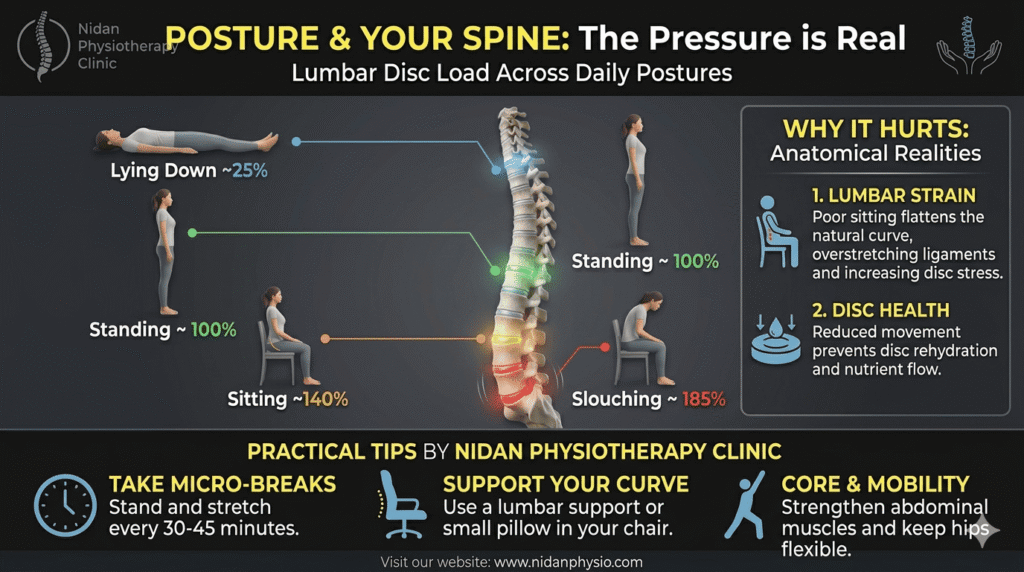
Most People Think Standing Is Hard on the Back. The Reality May Surprise You.
For many people, back pain feels like an unavoidable part of modern life.
Whether you’re working at a desk, attending online meetings, driving, studying, or scrolling through your phone, hours can pass without much movement. While this may seem harmless, your spine experiences very different levels of stress depending on how you position your body throughout the day.
At Nidan Physiotherapy Clinic, one of the most common concerns we hear is:
“Why does my back feel stiff or painful after sitting for a long time?”
The answer lies in how different postures affect the structures of your spine.
Your Spine Is Constantly Handling Load
The spine is designed to support your body while allowing movement and flexibility.
Throughout the day, the discs between your vertebrae act like natural shock absorbers. These discs help distribute forces during walking, standing, bending, and lifting.
However, not all positions place the same amount of demand on these structures.
When the body stays in one position for too long—especially a poor sitting posture—the lower back often absorbs more stress than it was designed to handle continuously.
Why Sitting Can Be Tougher on the Back Than Standing
Many people assume sitting is a form of rest.
While it may feel relaxing, prolonged sitting can actually place significant strain on the lower back.
When standing, your body naturally distributes weight through the spine, hips, knees, and feet. The muscles of the legs and core help share the workload.
When sitting, things change.
The hips remain bent for long periods, the abdominal muscles become less active, and the pelvis often begins to tilt backward. As this happens, the natural curve of the lower back gradually reduces.
This shift places additional pressure on the lumbar spine and surrounding tissues.
Over time, this can contribute to:
- Lower back stiffness
- Muscle tightness
- Reduced mobility
- Poor posture habits
- Increased discomfort during daily activities
Why Slouching Makes Things Worse
A slight slump in posture may not seem important.
However, spending hours in a rounded sitting position can increase strain on the structures at the front and back of the spine.
When the shoulders round forward and the lower back collapses, the spine loses its natural alignment.
This often leads to:
- Increased stress on spinal discs
- Tightness in the neck and shoulders
- Reduced core engagement
- Greater fatigue while sitting
Many people notice that their back feels more tired at the end of the workday simply because they have remained in the same slouched position for hours.
Why Movement Is More Important Than the “Perfect Posture”
One of the biggest misconceptions is that there is a single perfect sitting position.
In reality, even a good posture can become uncomfortable if maintained for too long.
The human body is built for movement.
Small changes in position throughout the day help:
- Improve circulation
- Reduce muscle fatigue
- Prevent stiffness
- Distribute load more evenly across joints
This is why physiotherapists often encourage regular movement rather than trying to sit perfectly all day.
How Sleep Helps Your Spine Recover
Your spine works hard during the day.
During sleep, the body finally gets a chance to recover.
When pressure on the spinal structures decreases, the discs can absorb fluid and nutrients more effectively. This process helps maintain their ability to cushion movement and support the spine.
This is one reason many people feel less stiff after a good night’s sleep and why quality rest plays an important role in spinal health.
Simple Ways to Reduce Back Strain During the Day
1. Take Frequent Movement Breaks
Try standing up every 30 to 45 minutes.
Walk around the room, stretch gently, or perform a few mobility exercises.
Small breaks often have a bigger impact than people expect.
2. Support Your Lower Back
Choose a chair that supports the natural curve of your lower back.
If needed, use a small cushion or lumbar support to help maintain a more comfortable sitting position.
3. Improve Hip Mobility
Tight hips can affect the position of the pelvis and place additional stress on the lower back.
Regular stretching and mobility exercises for the hips can help improve overall posture and movement.
4. Strengthen Your Core Muscles
Strong core muscles provide better support for the spine.
Simple strengthening exercises can improve stability and reduce the workload placed on the lower back.
5. Stay Physically Active
Walking, swimming, cycling, and regular exercise help keep the spine mobile and healthy.
The body functions best when movement becomes part of everyday life.
When Should You Visit a Physiotherapist?
Occasional stiffness after a long day is common.
However, if you experience:
- Frequent back pain
- Persistent stiffness
- Pain while sitting
- Difficulty standing upright
- Pain that affects daily activities
it may be time to seek professional help.
At Nidan Physiotherapy Clinic, we assess posture, mobility, strength, and movement habits to identify the underlying cause of discomfort and create a treatment plan tailored to your needs.
Final Thoughts
Modern lifestyles often require long hours of sitting, but your spine was never designed to stay still all day.
The key is not finding a perfect posture and holding it forever. The key is moving regularly, maintaining good spinal support, and building strength that helps your body handle daily demands.
Small changes in your routine today can help prevent bigger problems tomorrow.
If back pain or stiffness is affecting your daily life, the team at Nidan Physiotherapy Clinic can help you move more comfortably and protect your spinal health for the future.
FAQs
Is sitting really worse than standing for the spine?
Long periods of sitting can place greater stress on certain areas of the lower back, especially when posture is poor.
How often should I stand up during work?
Most physiotherapists recommend standing or moving every 30 to 45 minutes.
Can poor posture cause back pain?
Yes. Poor posture can increase strain on muscles, joints, and spinal structures over time.
Can physiotherapy help with back pain caused by sitting?
Absolutely. Physiotherapy can improve posture, mobility, strength, and movement habits that contribute to discomfort.
What is the best sitting position for back health?
A position that supports the natural curve of the spine, keeps the feet flat on the floor, and allows regular movement is generally recommended.
Leave a Reply