
Can Physiotherapy Help Migraines? A Simple Guide

Migraines are more than just headaches.
They can affect your entire day — making it hard to work, concentrate, or even relax. Some people feel pain on one side of the head, while others also experience nausea, dizziness, or sensitivity to light and sound.
Many people rely only on medicines for relief. While medicines can help, they don’t always address the everyday factors that may be making migraines worse.
At Nidan Physiotherapy Clinic, we focus on understanding those factors and helping you manage migraines in a more practical and long-term way.
What Exactly Is a Migraine?
A migraine is a type of headache that comes again and again, often with other symptoms.
You may experience:
- throbbing head pain
- nausea or vomiting
- sensitivity to light or noise
- tiredness or low energy
- difficulty focusing
Migraines are linked to how the brain and nervous system respond to different triggers, not just one single cause.
Why Do Migraines Keep Coming Back?
Many people notice that migraines are triggered by daily habits or conditions like:
- stress or mental pressure
- long screen time
- poor sleep
- dehydration
- irregular meals
- neck stiffness or poor posture
- bright lights or strong smells
The reference blog also explains that migraines are influenced by multiple systems in the body, including stress, environment, and nervous system sensitivity.
This is why only treating the pain is not enough — we need to understand the triggers.
What Role Does Physiotherapy Play in Migraine Relief?
Physiotherapy does not replace medical treatment, but it can support better migraine management.
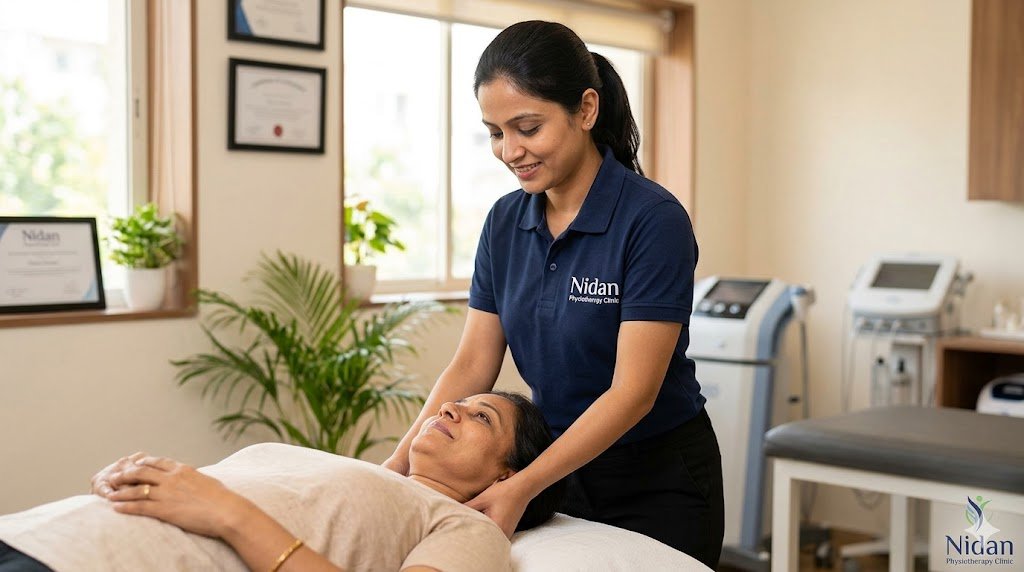
At Nidan Physiotherapy Clinic, we help by working on the physical factors that may increase migraine frequency or intensity.
How Physiotherapy Can Help
1. Improving Neck and Posture Problems
Many people with migraines also have tight neck and shoulder muscles.
Long hours of sitting, mobile use, or poor posture can increase tension in these areas. This tension can make headaches feel worse.
Physiotherapy helps by:
- improving posture
- reducing muscle tightness
- increasing neck mobility
2. Reducing Muscle Tension
Tight muscles in the neck, shoulders, and upper back can add extra stress to the body.
Manual therapy, stretching, and relaxation techniques can help reduce this tension and make you feel more comfortable.
3. Exercise and Movement
Gentle exercises can improve blood flow, reduce stiffness, and help your body handle stress better.
This may include:
- neck mobility exercises
- shoulder strengthening
- light aerobic activity like walking
The reference blog also supports exercise as part of migraine management, especially when done regularly.
4. Stress and Lifestyle Awareness
Stress is one of the biggest triggers for migraines.
Physiotherapy may include simple strategies like:
- breathing exercises
- relaxation techniques
- guidance on daily routine
Even small changes can help reduce the chances of a migraine episode.
5. Education About Your Condition
Understanding your migraine is important.
When you know your triggers and patterns, you can manage them better. Physiotherapists often guide patients on:
- identifying triggers
- tracking symptoms
- managing daily habits
Simple Daily Tips to Reduce Migraine Triggers
You can start with these small changes:
- Maintain a regular sleep schedule
- Stay hydrated throughout the day
- Avoid long continuous screen time
- Take breaks during work
- Practice gentle neck movements
- Manage stress with simple relaxation techniques
These habits support both your body and nervous system.
When Should You Visit a Physiotherapy Clinic?
You should consider visiting Nidan Physiotherapy Clinic if:
- migraines are frequent
- pain is affecting your work or routine
- neck stiffness is common
- headaches are linked to posture or long sitting
- medicines give only temporary relief
Early support can help reduce the frequency and intensity of migraines.
Final Thoughts
Migraines can feel overwhelming, especially when they keep coming back.
But managing them is not only about taking medicines. It is also about improving movement, reducing stress, and understanding your body better.
At Nidan Physiotherapy Clinic, we help you take control step by step — focusing on practical changes that support long-term relief.
Leave a Reply