
Whiplash Injury: How Early Physical Therapy Can Help You Heal Faster

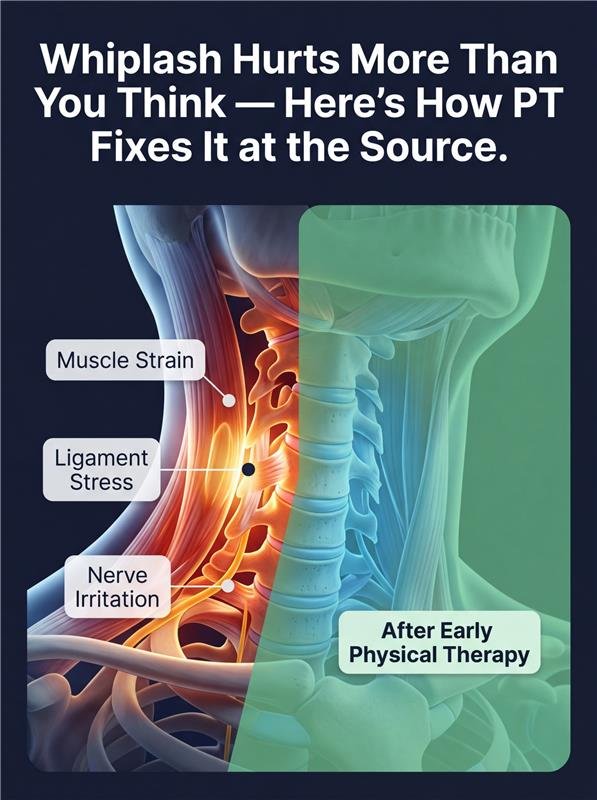
A neck injury that happens suddenly can change more than just how you move. It can make it hard to do simple things like turn your head, sleep well, work on a laptop, or drive.
Whiplash is a common injury that happens after a sudden impact. It happens to a lot of people after a car accident, but it can also happen in sports, falls, or any other situation where the head is thrown hard back and forth.
Some people think the pain will go away on its own, but getting help early on often makes things go more smoothly. Physiotherapy can help with pain relief, neck movement, and the risk of long-term stiffness.
What is whiplash?
Whiplash hurts the neck and is a soft tissue injury. When the neck is forced to move back and forth very quickly, it usually happens. This can make the muscles, ligaments, and joints around the cervical spine hurt or get tight.
People often call it a neck strain, but the symptoms can be different for each person. Some people only feel a little sore, while others get headaches, tightness, less movement, or pain that doesn’t go away.
The reference article also talks about whiplash as a neck injury that happens when the head suddenly jerks, which is usually followed by pain and stiffness.
What Happens Most of the Time That Causes Whiplash?
Most of the time, whiplash happens when someone hits you from behind in a car, but that’s not the only way it can happen. It can also happen because of:
Sports accidents, slipping or falling, sudden force during an attack, or even sharp jolts on rides can all cause this.
It’s not just important how the accident happened, but also how your neck feels after. Even a small movement at the time can cause symptoms later on. The source material also lists vehicle accidents, contact sports, falls, abuse, and amusement rides as common causes.
Don’t ignore these signs of whiplash
Some people don’t feel the symptoms right away. Sometimes, pain or stiffness doesn’t show up until several hours later or even the next day.
Some common signs of whiplash are:
pain in the neck, tightness in the neck, trouble turning the head, headaches, dizziness, shoulder pain, tiredness, trouble focusing, and sometimes ringing in the ears.
The source also says that symptoms may not always show up right away, which is why it’s important to get checked out early.
Why Treatment Early Is Important
A lot of people don’t move at all when their neck hurts. That may feel safe at the time, but resting too much can make you stiffer and slow down your recovery.
Getting help early can be helpful in a number of ways:
calm down pain, make you feel more confident about moving, stop your neck from getting too stiff, and help you get back to your normal activities faster.
The article you shared makes a big deal out of getting physiotherapy early on to ease pain, improve function, and stop symptoms from getting worse over time.
How physiotherapy can help after whiplash
A physiotherapist does more than just help with pain. The first step is to know how the injury is affecting your neck, posture, daily activities, and confidence in moving.
Depending on your condition, treatment may include:
Training for Gentle Movement
In the beginning, very simple neck movements can be added to help healing and keep stiffness from getting worse.
Treatment with your hands
Your physiotherapist may use manual techniques to help the neck move more easily and ease muscle tightness, depending on the situation.
Work on stretching and moving around
When the pain starts to go away, you can do certain exercises to improve your flexibility and get your range of motion back to normal.
Exercises for Strength and Stability
Later on in recovery, it’s important to work on the muscles in the neck, upper back, and posture. This helps the neck stay supported better while working and going about daily life.
Advice on posture and ergonomics
Little things make a difference. Sleeping position, desk setup, phone use, and posture can all affect recovery, so these are often part of treatment too.
The reference draft includes similar physiotherapy topics, such as gentle exercise progression, mobility work, strengthening, advice on posture, and manual treatment methods.
Can physiotherapy help keep neck pain from coming back?
Yes, that’s one of the main reasons why early physiotherapy is recommended.
If pain, stiffness, and bad movement patterns last too long, it can be harder to get better. Getting treatment quickly can help patients start moving safely again, which may lower their risk of having neck pain that lasts.
The source article also says that physiotherapy-led care can help keep chronic pain from coming back and stop it from happening in the first place.
What could a plan for recovery look like?
Not everyone recovers in the same way. A mild case may get better quickly, but a more serious injury may need a more structured rehab plan.
A physiotherapy recovery plan might have:
an initial evaluation, a structured exercise regimen, symptom monitoring, a progressive escalation of activity, and consistent modifications to treatment contingent upon advancement.
The source text also stresses the importance of assessment, individualized programs, and tracking progress over time instead of sticking to one plan.
When should you get checked?
If you need help with your health or physical therapy, you should think about getting it.
You can’t move your neck properly, the pain is getting worse instead of better, you feel numbness, weakness, or severe dizziness, or the symptoms don’t go away after a few days.
The reference also says to see a doctor again if symptoms get worse, don’t go away, or are linked to numbness or trouble moving around.
A Better Way to Get Better
Getting better from whiplash isn’t just a matter of waiting for the pain to go away. It’s about helping the neck heal properly, getting people to trust their movements again, and stopping problems from happening in the future.
Many people can get better with the right physiotherapy plan. They can get rid of pain, regain mobility, and safely return to their normal activities.
If you hurt your neck suddenly and are in pain, getting treatment right away can really help.
SEO Frequently Asked Questions
How can I tell if I have whiplash?
Whiplash may be the cause of neck pain, stiffness, headaches, or dizziness that starts after a sudden impact or accident.
Does physiotherapy help with whiplash?
Yes. Physiotherapy can help you move your neck better, ease your pain, and help you heal in a safe and organized way.
How soon after whiplash should treatment start?
In a lot of cases, getting help earlier is better because it can help with stiffness and keep symptoms from coming back.
Can whiplash last a long time?
It can, especially if you don’t pay attention to the symptoms or don’t move around much for too long.
What should I stay away from after whiplash?
Don’t push yourself to do painful things, ignore symptoms that don’t go away, or stay inactive for too long without professional help.
Leave a Reply