
How physiotherapy can help with low back pain: what causes it, what it feels like, and how to treat it

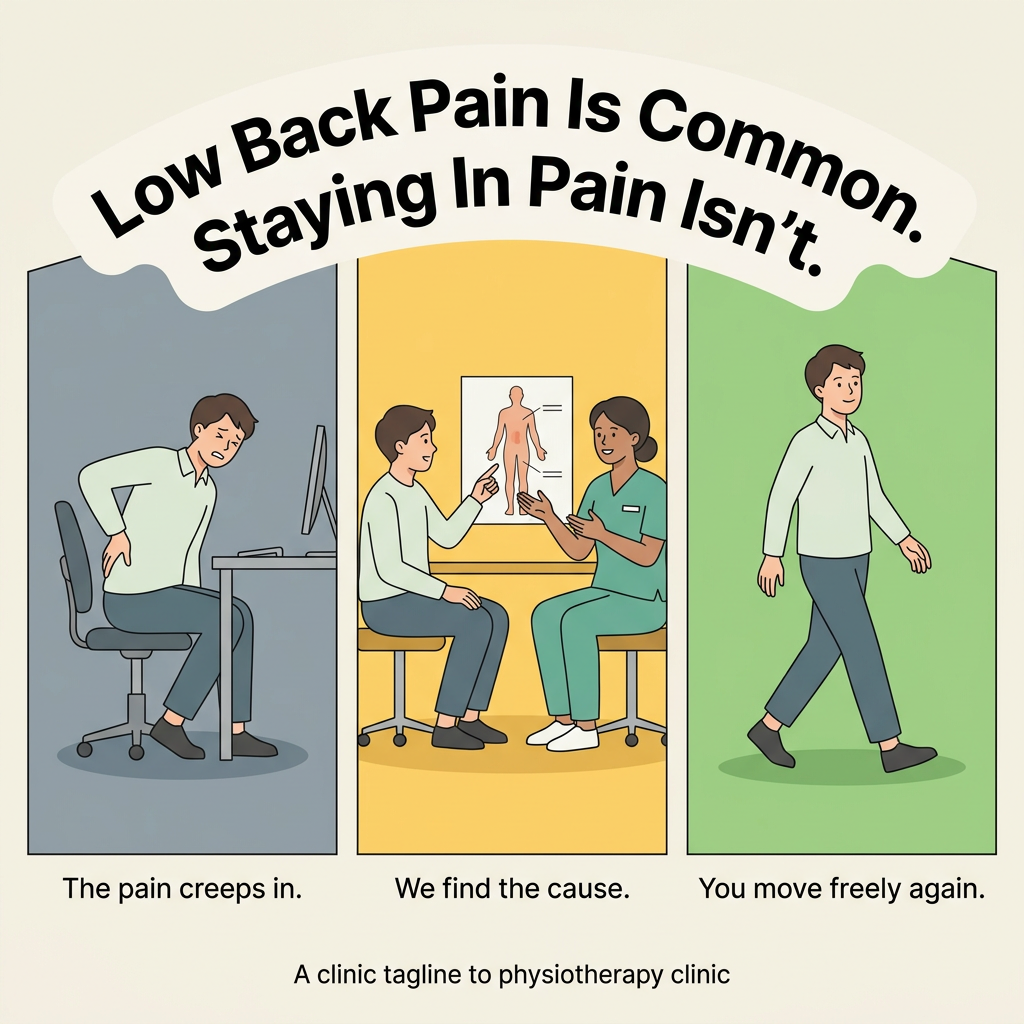
A lot of people go to physiotherapy clinics because they have low back pain. Anyone can get it, including office workers, stay-at-home parents, athletes, drivers, and older people.
Sometimes the pain starts right after you lift something heavy. Bad posture, stress, weakness, or long periods of sitting can make it build up slowly. A lot of the time, people are afraid that something is very wrong. The good news is that most low back pain gets better with the right advice, exercise, and treatment plan.
We help people at our physiotherapy clinic figure out what really caused their back pain and get better in a safe, practical, and long-lasting way.
What Is Pain in the Lower Back?
Low back pain is pain, stiffness, or discomfort in the lower back. It might stay in one spot or move to the hips, buttocks, or legs.
Some people feel a dull pain. Some people experience acute pain when bending, standing, walking, or rising from bed.
Physiotutors talked about some recent research that says a lot of cases of low back pain are called non-specific low back pain. This means that the pain is real, but there isn’t one clear structure that fully explains it.
That might sound frustrating, but it really means that a lot of people don’t need to worry. Pain doesn’t always mean that something is broken.
What Causes Low Back Pain Most Often
There are many reasons why you might have low back pain, such as:
- Strain on muscles or ligaments
- Bad posture
- Long hours of sitting
- Muscles in the back and core are weak
- Lifting or twisting quickly
- Not enough exercise
- Stress and strain
- Disc irritation or herniation
- Wear and tear that comes with age
The article you shared also says that more than one physical problem can cause low back pain. Biomechanics, daily load, and social and psychological factors can all be important.
What is low back pain that isn’t specific?
Patients need to know this very well.
You have low back pain, but scans or tests don’t show a clear cause, like a fracture, infection, or severe nerve compression. The article says that this group could be responsible for up to 95% of cases of low back pain.
In other words, your pain is real, but it might not be caused by just one injury that you can see.
That’s why treatment should not only look at reports and scans, but also:
your symptoms, how much you move, how strong you are, your daily habits, your fear of moving, your stress, your sleep, and how active you are.
Does a bulging disc always mean bad back pain?
Not all the time.
A lot of people get scared when they hear terms like “disc bulge” or “disc herniation.” But not all disc problems cause severe pain, and not all severe pain is caused by a disc problem.
That’s why a good physiotherapy assessment is important. We check out:
where the pain is, what movements make it worse, if it goes down the leg, if there is numbness or weakness, and how your body reacts to movement.
The point is not just to name the problem. The goal is to figure out how to help you feel and move better.
Why people with low back pain may feel differently
Two people can have the same scan results but feel very different levels of pain.
The article says that not only the treatment itself but also things like the patient’s expectations, the therapist’s confidence, and the treatment environment can affect how well the treatment works.
For patients, this means that getting better isn’t just about doing exercises on paper. It’s also about:
feeling understood, being sure about movement, lowering fear, and sticking to a plan that makes sense in real life.
That’s one reason why personalized physiotherapy is better than general advice you find online.
How physiotherapy can help with low back pain
Physiotherapy helps by treating the pain and the cause of the pain.
A physiotherapy plan for treating low back pain may include:
1. A thorough evaluation
We look at posture, how the spine moves, how tight the muscles are, how strong they are, nerve symptoms, and how you move.
2. Ways to ease pain
Depending on your condition, this could involve soft tissue work, manual therapy, gentle movement, heat therapy, or other methods.
3. Therapy with exercise
One of the best ways to treat chronic low back pain is to exercise. The source article says that strengthening and stabilization exercises, aerobic exercise, and Pilates can all help, but there is no one type that is clearly better for all patients.
4. Advice on posture and activity
We show you how to sit, stand, bend, lift, and move better in your daily life.
5. Prevention for the Long Term
The goal isn’t just to relieve pain in the short term. The goal is to lower the chances of the pain coming back.
What are the best exercises for back pain?
There isn’t one exercise that works for everyone.
What the best exercise is depends on:
your age, how much pain you have, how stiff you are, how strong you are, how often you work, and whether the pain is new or old.
The article talks about research that shows that a lot of different types of exercise can help with chronic low back pain. It also says that the intensity, duration, and consistency of the exercise may be just as important as the type of exercise.
This is why physiotherapy programs shouldn’t be copied from social media videos; they should be made to fit each person.
When should you go to a physiotherapist for back pain?
If you are in any of these situations, you should get professional help:
If your pain lasts longer than a few days, keeps coming back, hurts when you sit, walk, or bend, travels into your leg, makes you feel numb or tingly, or gets in the way of work, sleep, or daily activities, you should see a doctor.
Treating a problem early on can often stop it from becoming a bigger one.
A Simple Truth About Pain in the Back
A lot of people rest too much because they think moving will make the pain worse.
But in most cases, moving around safely and with guidance helps you get better faster than just resting. The main point of the article is that the best way to treat low back pain is to use a combination of exercise, education, and other forms of support, rather than just one method.
That’s where physiotherapy can really help.
Last Thoughts
Low back pain can be hard to deal with, stressful, and limiting, but it can be treated.
You don’t always have to think the worst. You need the right plan, the right assessment, and the right exercises for your body.
Our physiotherapy clinic’s main goal is to help you move better, feel stronger, and get back to your normal life with confidence.
Don’t ignore your back pain and don’t try to figure out what it is by looking it up online. A good physiotherapy assessment can help you figure out what’s going on and what to do next.
FAQ Section
Is physiotherapy good for low back pain?
Yes. Physiotherapy can help reduce pain, improve movement, build strength, and prevent future episodes of low back pain.
How many physiotherapy sessions are needed for back pain?
It depends on the cause, severity, and how long the pain has been present. Some people improve in a few sessions, while others need a longer rehab plan.
Can exercise make back pain worse?
Wrong exercises or poor technique can aggravate pain, but the right exercises under guidance usually help recovery.
Should I rest if I have lower back pain?
Short rest may help during severe pain, but too much rest can slow recovery. Guided movement is often more helpful.
Is a disc bulge the same as severe back pain?
Not always. Some people with disc changes have little or no pain, while others may have pain due to multiple factors.
Leave a Reply